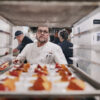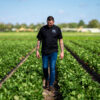

Shane Schaibly has spent more than a decade helping shape the culinary direction of First Watch, one of America’s leading daytime dining brands. As Corporate Chef and Senior Vice President of Culinary Strategy, he blends creativity, innovation, and operational expertise to deliver memorable guest experiences at scale. For Schaibly, success always comes back to great food, strong teams, and genuine hospitality. Be sure to follow him on Instagram.
First Watch has grown into one of the most recognizable daytime dining brands in America. How do you continue innovating while preserving the identity guests have come to love?
Innovation has always been part of First Watch’s DNA. We approach it on multiple levels. Our seasonal menu program, which changes every ten weeks, gives us the opportunity to explore new flavors, ingredients, and emerging trends. It allows us to move quickly, test ideas, and bring exciting new offerings to guests across the country while staying true to who we are.
At the same time, our core menu serves as the foundation of the brand. These are the dishes our guests know and love, and we evolve them thoughtfully and intentionally. When changes are made, they are often small refinements designed to improve the experience while preserving the favorites that have earned a lasting place on our menu.
The key is finding the right balance between innovation and consistency. We want guests to discover something new every time they visit, while still feeling connected to the flavors and experiences that made them fall in love with First Watch in the first place.
As Corporate Chef and Vice President of Culinary Strategy, what trends are genuinely influencing your decisions today, and which ones do you think the industry is paying too much attention to?
Trends only matter if they make sense for your brand and your guests. Rather than chasing what everyone is talking about, we focus on identifying ideas early, testing them thoughtfully, and determining whether they truly fit the First Watch experience. That approach has helped us stay ahead of the curve with initiatives like our fresh juice program, avocado toast, and partnerships such as Mike’s Hot Honey.
Today, we’re paying close attention to innovation in beverages, the evolving flavors and ingredients emerging from Latin America, and what’s happening across the brunch space. We also invest heavily in firsthand research, regularly visiting independent restaurants around the country to discover ideas before they become mainstream. The goal is not to follow trends, but to uncover concepts with staying power that can create real value for our guests.
You’ve cooked in fine dining and now lead culinary strategy at scale. What lessons from the chef world still guide your approach today?
The principles I learned in fine dining still guide everything we do at First Watch, even at our current scale. We approach every dish, presentation, and menu decision with the same level of care and attention as if we were operating just a handful of restaurants.
First, flavor always comes first. You can never sacrifice quality in pursuit of cost savings because guests notice when ingredients change, portions shrink, or corners are cut. Second, great recipes should teach. We build tips and techniques directly into our recipes to help cooks execute more efficiently and consistently while continuing to develop their skills.
Most importantly, I’ve learned to leave ego out of the process. The best ideas come from collaboration, and every person at the table brings a valuable perspective. At the end of the day, these are not my dishes or anyone else’s. They are First Watch dishes, and our job is to create food that works for our teams and delivers the best possible experience for our guests.

How do you balance chef-driven creativity with the operational realities of launching a dish across a national restaurant brand?
Honestly, I love this challenge. To me, creating dishes for a national brand is like solving a giant puzzle. As long as you understand the capabilities of your teams, equipment, and suppliers, you can make some pretty amazing things happen.
At First Watch, we’ve spent more than a decade launching five seasonal menus a year, so there is never a shortage of creativity. The fun part is figuring out how far we can push an idea while still making it work in hundreds of restaurants. Maybe it’s finding a supplier who can get an ingredient 95 percent of the way there so our cooks can focus on something that really matters, like fresh juicing a new beverage or baking a mini biscuit from scratch.
I’ve never been a fan of saying, “We can’t do that because we’re too big.” I’d much rather roll up my sleeves and find a solution that gets us as close as possible to the original vision without sacrificing quality. That’s where the challenge is, and honestly, that’s where a lot of the fun is too.
What does successful menu development look like in 2026, and how has that definition changed over the last decade?
For us, successful menu development starts and ends with the guest experience. We are not chasing viral moments or creating dishes just because they are trending online. The goal is to develop items that make sense for First Watch, excite our guests, and can be executed confidently by our teams in every restaurant.
That requires a deep understanding of your brand, your people, and your customers. We spend a tremendous amount of time in our restaurants, talking with operators and team members, gathering feedback, and making sure there is a strong connection between the field and our support teams. When a new menu launches, we want our teams to feel just as excited about it as our guests.
The philosophy has not changed much over the past decade. What has evolved is how we train and communicate. Today’s teams learn differently, so we’ve adapted with shorter, more engaging training tools, quick videos, and more context around the “why” behind each dish. Most importantly, we’ve learned to listen. The best menu development process is one that stays flexible, takes feedback seriously, and continues improving all the way from testing to national launch.
Today’s guests are increasingly interested in health, sustainability, and transparency. How are those expectations shaping the future of First Watch?
The funny thing is, a lot of what people are calling trends today has been part of the First Watch playbook for decades. We were founded in California in 1983, so fresh produce, seasonal ingredients, and health forward menu development have always been in our DNA. That said, if you want a triple stack of chocolate chip pancakes, we’ve got you covered there too.
We juice fresh fruits and vegetables every morning in every restaurant, roast and prep fresh vegetables daily, and work hard to source ingredients from partners we believe in. We also have no deep fryers, no heat lamps, and no microwaves in our restaurants, which naturally pushes us toward fresher preparation methods. It’s not something we built because it was trendy. It’s just the way we’ve always liked to cook.
When it comes to sustainability and transparency, we try not to overcomplicate it. We partner with suppliers that have great stories and share our values, and when those stories are worth telling, we’ll tell them. But we don’t feel the need to put a badge or a label on everything. Some guests want to know where every ingredient comes from, while others just want a great breakfast and a good cup of coffee. Our job is to deliver both. We focus on making really good food and trust that if we’re excited about the ingredients we’re using, our guests will be too.

Can you share a menu item that seemed simple on paper but proved surprisingly difficult to perfect?
That’s a tough one because most of the dishes that gave us headaches never actually made it to the menu. Over the years, we’ve definitely had ideas that sounded great on paper but ran into challenges once we started testing them. Sometimes it’s an equipment limitation, sometimes it’s a prep process that’s just too labor intensive, and sometimes a dish performs well with guests but creates too much complexity for our operations teams.
One thing I’ve learned is that a successful menu item has to work for everyone. It has to excite the guest, but it also has to be something our teams can execute consistently and confidently every day. If a dish requires too many steps or puts too much strain on the kitchen, it doesn’t matter how good it tastes.
The good news is we treat those moments as creative challenges rather than roadblocks. We work closely with our test restaurants, gather feedback, solve problems, and keep refining until we find a version that works. Sometimes that leads to a nationwide launch, and sometimes it leads to the realization that the idea just isn’t the right fit. Either way, there’s always something to learn from the process.
How do you inspire creativity across a culinary team when you’re responsible for hundreds of restaurants rather than just one kitchen?
We’re fortunate to have a culinary team that checks its ego at the door and always focuses on what’s best for the brand. The goal is never to create dishes for personal recognition. It’s about creating menu items that make sense for First Watch and deliver a great experience for both our guests and our teams. What keeps creativity flowing is staying connected to the people who bring these dishes to life every day. Our teams in the restaurants can tell when something has been thoughtfully developed by people who understand their world. They know when a dish has been designed with execution, workflow, and guest experience in mind because many of us have stood in those same shoes.
For me, that’s the biggest source of inspiration. When you see the excitement from the field and know your teams are genuinely proud to serve a new dish, it motivates everyone to keep pushing, creating, and finding new ways to make the brand better.
When you look at the next generation of chefs and hospitality professionals, what skills do you believe will be most important for success?
From a corporate chef standpoint, the next generation is going to have some unbelievable tools at its fingertips. AI can help spark ideas, create inspiration boards, visualize dishes, and communicate concepts faster than ever before. At the same time, we’re seeing major advances in food manufacturing, packaging, distribution, and supplier technology. The chefs who succeed won’t be the ones fighting that change. They’ll be the ones who learn how to use those tools to their advantage.
Just as important, they’ll need to get comfortable working beyond the kitchen. Invite marketing to the table. Bring finance and supply chain into tastings. Make friends in IT. The more perspectives you have in the room, the better the outcome is usually going to be. Some of the best ideas come from people you might not expect.
From a hospitality standpoint, though, I think the most important skill hasn’t changed at all. Know your teams and know your customers. As an industry, we cannot afford to lose the hospitality side of hospitality. The second a restaurant forgets that we’re here to feed people, take care of them, and make them happy through food and experience, things start heading in the wrong direction.
Of course, we all need to run profitable businesses, but this industry has always been about people first. The real skill is knowing when to push, when to pull, and how to balance all the moving pieces without losing sight of the guest sitting at the table.
After all your years in the industry, what still excites you enough to get out of bed every morning and think about food?
Honestly, it’s still the people that get me excited. I love spending time in our restaurants, talking with everyone from dishwashers and cooks to servers and GMs. Being a bridge between the field and the support center and seeing our teams embrace what we’re creating is incredibly rewarding.
I also love the variety. Every day brings a new challenge, whether it’s food, marketing, supply chain, finance, or restaurant design. Getting to solve problems, collaborate with great people, and help make the business better is what keeps me excited to come to work every morning.

B.E.C., BEC, The B.E.C., The BEC, Brunch, Burger, Food, Food Presentation