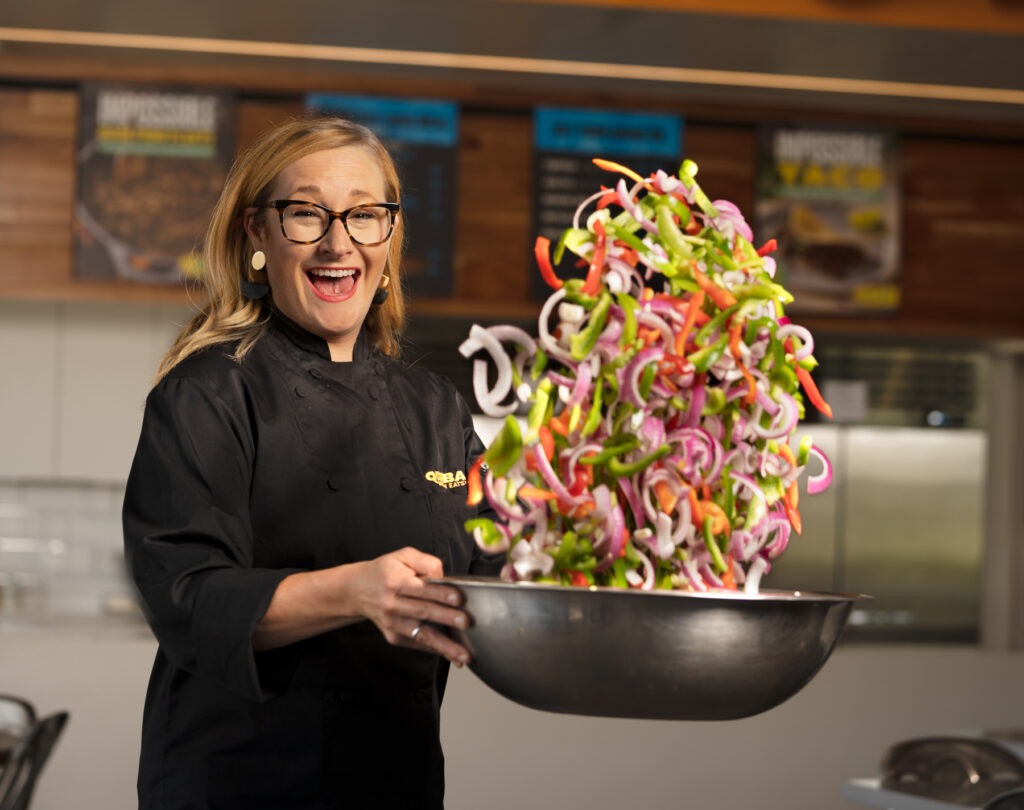

Chef Katy Velazquez is a culinary innovator redefining modern Mexican cuisine through bold flavors, thoughtful storytelling, and a passion for authenticity. As part of the culinary leadership team at QDOBA Mexican Eats, she brings creativity, operational expertise, and a fresh perspective to menu innovation at scale. Be sure to follow her on Instagram!
How do you preserve the integrity of traditional Mexican cuisine while evolving it for a fast-casual audience?
One of the most exciting shifts we’ve seen is how much more knowledgeable and adventurous guests have become when it comes to Mexican cuisine. Early on, there was a tendency to soften certain flavors or adjust spice levels to align with what we believed American diners expected. We’ve found that’s no longer necessary. Guests now actively seek out authentic flavors, regional ingredients, and the complexity that defines Mexican cooking.
Rather than changing the food itself, our focus is on making it approachable. That often means using names that guests feel comfortable ordering and providing clear, descriptive language around flavors, ingredients, and preparations. By creating familiarity and setting expectations, we can stay true to the integrity of traditional Mexican cuisine while making it accessible in a fast-casual setting.
What responsibility do you feel when representing Mexican flavors at scale in a brand like Qdoba Mexican Eats?
Representing Mexican flavors at scale comes with a responsibility to be respectful, intentional, and honest about who we are. At Qdoba, we’re not trying to be the definitive representation of Mexican cuisine, but we do want to honor the traditions, ingredients, and flavors that inspire us.
Personally, I have what I call the “Suegra Test.” Whenever I’m developing a recipe, I often ask myself, “What would my mother-in-law say?” There have been times when she’s tasted something and said, “It’s good, but it’s not Mexican.” That perspective helps keep me grounded and reminds me of the difference between inspiration and authenticity. The challenge today is balancing that authenticity with the evolving tastes of our guests. Social media introduces new food trends almost daily, and while we pay attention to them, we don’t chase trends for their own sake. Every new flavor, sauce, or dish has to feel true to our brand and the culinary traditions that influence us.
Fortunately, Mexican cuisine offers an incredible depth of regional flavors, ingredients, and techniques that many Americans have yet to discover. That gives us endless opportunities to introduce something new while staying rooted in genuine culinary traditions. My role is to find that balance while celebrating the richness and diversity of Mexican flavors in a way that feels authentic, approachable, and true to who we are.
When developing a new menu item, how do you decide what stays rooted in tradition versus what gets a modern or unexpected twist?
Ultimately, we let our guests guide us. We conduct several types of consumer research to understand which flavors, ingredients, and concepts resonate most, and those insights help determine what moves into larger market tests.
Rather than deciding between tradition and innovation ourselves, we often present guests with a range of options and listen to their feedback. Sometimes the clear favorite is a deeply traditional flavor profile, and other times it’s a more contemporary interpretation. Our goal is to understand what excites our guests while staying true to the quality and culinary inspiration behind the dish.
What are the biggest challenges in translating chef-driven concepts into systems that can be executed consistently across all locations?
One of the biggest lessons I’ve learned is to be realistic about execution. The most successful recipes are often the simplest ones. Simplicity creates consistency, and consistency is critical when operating at scale.
That said, there are times when a particular technique makes a meaningful difference in the final product. In those cases, rather than compromising the recipe, we invest in education. For example, we bring in raw shrimp and sear it before it’s sauced because that step develops a depth of flavor and texture that simply can’t be achieved by cooking it in a steam cabinet. While there may be easier ways to execute the dish, we believe the result is worth the extra effort.
When we ask our teams to take those additional steps, it’s important that they understand the “why” behind them. That’s why we spend significant time training and educating our teams each year. When people understand the purpose behind a process, they’re more likely to execute it with care and consistency.
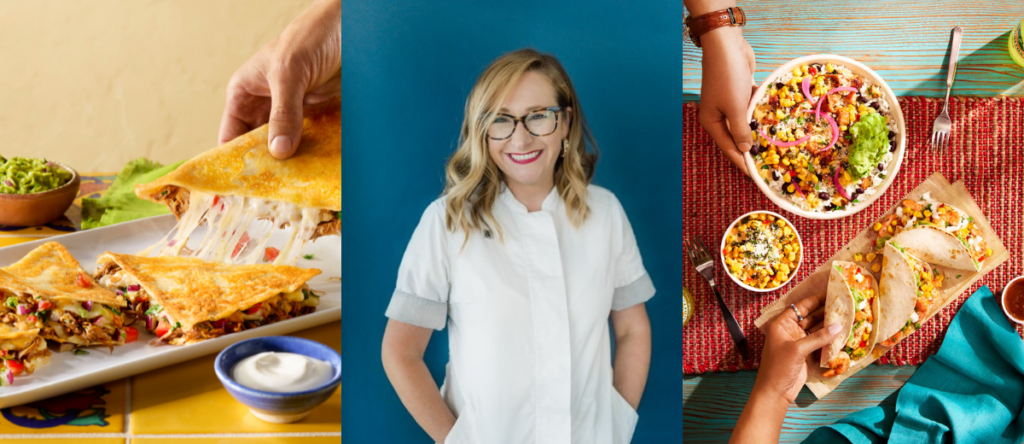
Your experience across TV, cookbooks, and podcasts is unique. How has storytelling influenced the way you approach menu development today?
I’m not sure storytelling directly influences how I develop menus, but it has absolutely shaped how I do my job. Before food, I was a theater kid, and I think that experience taught me how to connect with people, communicate ideas, and tell a compelling story.
Throughout my career, I’ve learned that great ideas only go so far if you can’t effectively share them. The ability to explain a concept, inspire a team, or help guests understand the story behind a dish has been one of the most valuable skills I’ve developed.
How do you ensure that each dish tells a story or creates an emotional connection for the guest, even in a fast-casual setting?
That’s actually the easy part! Every dish, ingredient, and flavor has a story to tell. Sometimes it’s a story of migration and cultures coming together. Sometimes it’s about the farmers, producers, and craftspeople whose passion makes an ingredient special. Other times, it’s part of our own story, like bringing back a beloved Qdoba favorite that guests have been asking for.
Food has always been a form of storytelling; it just happens to be our medium. Our job is to uncover those stories and create meaningful connections through flavor and experience. We’re also fortunate to have an incredibly talented marketing team that helps bring those stories to life beyond the plate. Through photography, social media, email campaigns, and other guest touchpoints, they help communicate the people, traditions, and inspiration behind what we’re serving. When those elements come together, even a fast-casual meal can create a genuine emotional connection.
How do you build and inspire a culinary team to think creatively while still operating within corporate and operational constraints?
We’ve built a culture that encourages curiosity and experimentation. The first rule is simple: no idea is off the table. We want our culinary team to think like chefs first and operators second during the creative process. Our ideation often begins the same way it would in a home kitchen or a full-service restaurant, with an ingredient, a flavor, or an idea that excites us. From there, we develop the best possible version of the dish without worrying about scale, labor, or operational constraints. We focus solely on creating something we genuinely love.
Once we’ve established that “gold standard” recipe, the real work begins. We then collaborate across teams to adapt it for the Qdoba system, always using that original version as our benchmark. Every decision is measured against the question: How close can we get to the flavor, texture, and experience of the original while making it scalable and executable across hundreds of restaurants? That approach allows us to foster creativity without losing sight of operational realities.
What qualities do you look for when hiring or mentoring chefs who want to work in innovation roles rather than traditional kitchens?
When hiring or mentoring chefs for innovation roles, I look for three qualities above all else: positivity, attention to detail, and persistence. Innovation involves a lot of trial and error, so it’s important to stay optimistic when things don’t go as planned, pay close attention to the details that make a dish successful, and keep pushing until you find the right solution. Those traits are what turn great ideas into great results.
From restaurant kitchens to media to corporate leadership, what has been the most defining shift in how you think about food?
Working at Qdoba has completely changed how I think about food. I’ve learned that simplicity doesn’t have to mean sacrificing flavor, in fact, the constraints of scale often drive better creativity. Having to do more with less has made me a more thoughtful chef and reinforced that great food is about maximizing impact, not complexity.
Looking back at your time with Puesto and now at QDOBA, what has most shaped your philosophy on modern Mexican cuisine?
I don’t know that there was a single defining moment. Puesto began to reshape how I thought about modern Mexican cuisine, and my time at Qdoba has continued that evolution. More than anything, though, living in San Diego for the past seven years has had a profound impact on my perspective.
Being in a border region, where cultures, ingredients, and traditions constantly intersect, has shown me that cuisine is always evolving. Seeing how people and place influence food has become a constant source of inspiration and has reinforced my belief that honoring tradition and embracing innovation can go hand in hand.