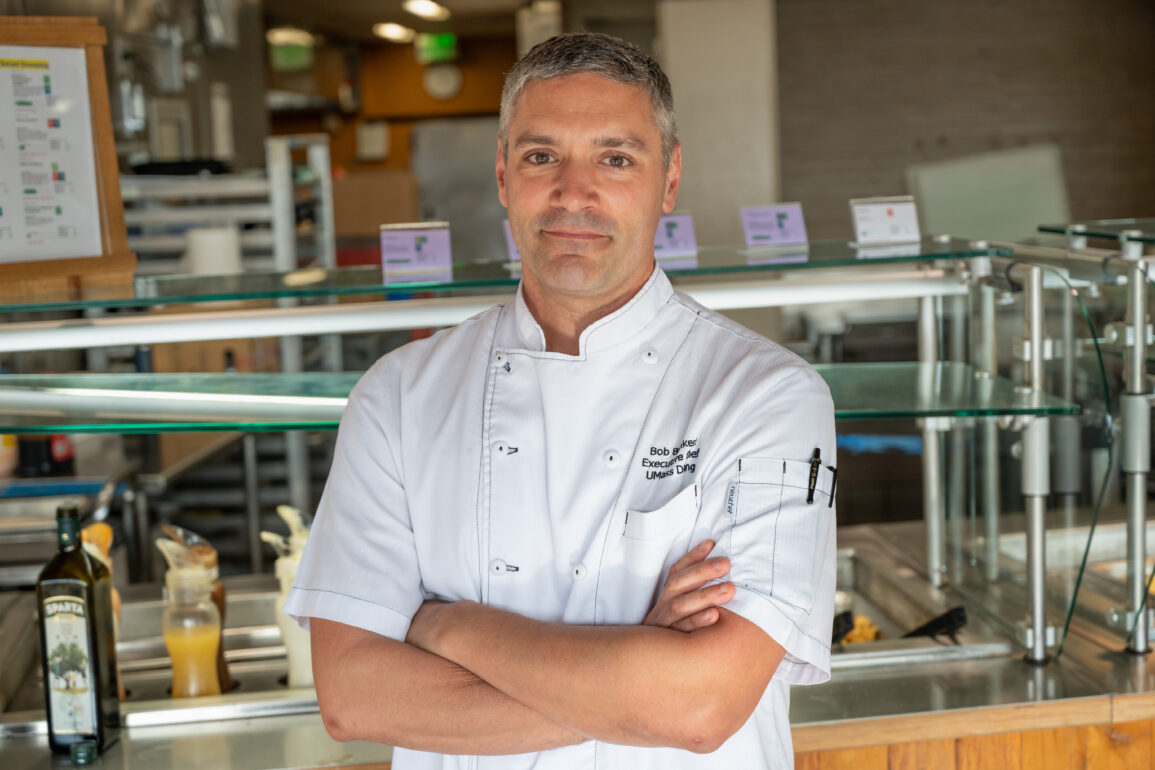
Robert Bankert, Executive Chef of Residential Dining at University of Massachusetts Amherst, leads one of the most dynamic campus dining programs in the country. Overseeing tens of thousands of meals each day, his approach is rooted in quality, seasonality, and a deep respect for ingredients. By treating university dining like a true kitchen, not an institution, Bankert is helping redefine what large-scale food service can look like, proving that thoughtful, chef-driven cooking can thrive at any volume. Be sure to follow him on Instagram.
UMass Amherst dining has been described as “one of the hottest tables in America”—what key decisions elevated the program to that level?
It starts with a simple goal: serve food that’s healthy, sustainable, and genuinely delicious. From the beginning, we chose to run this like a real kitchen, not an institution, cooking from scratch, changing menus with the seasons, and building strong relationships with local farms and producers.
I’m especially proud of our team. They care deeply about the work, and it shows. There’s real ownership here. People aren’t just following a menu, they’re helping shape it, which keeps creativity alive even at high volume.
We also embrace global cuisine in a meaningful way. Our students come from all over the world, so we make an effort to reflect that with a wide range of authentic flavors, from Asian and Mediterranean to Latin American, featured across campus every day.
At the end of the day, it’s about making food we’d be proud to serve anywhere. With strong values, great ingredients, and a passionate team, we’re able to create something truly special at scale.
With such high demand and attention, how do you maintain consistency and quality while operating at massive scale?
We serve over 50,000 meals a day across campus, with menus that change daily, so consistency and quality have to be built into everything we do. It starts with the ingredients. When you bring in high-quality, wholesome products, you’re already on the right path. From there, we focus on simple, well-executed techniques. The goal isn’t to overcomplicate the food, it’s to make it taste great every single time.
A big part of that consistency comes from our team. Our culinarians take real pride in what they do, and it shows in the details. Respecting the ingredients, seasoning properly, cooking with care, and staying organized are the fundamentals that allow us to deliver at a high level every day.
The program is known for constant variety and themed dining—how do you keep innovation fresh without overcomplicating execution?
At our scale, we have to be intentional about what goes on the menu. Some dishes simply don’t translate well to 1,000-plus portions, so menu innovation and engineering are key. We focus on what we know we can execute consistently and at a high level, day in and day out.
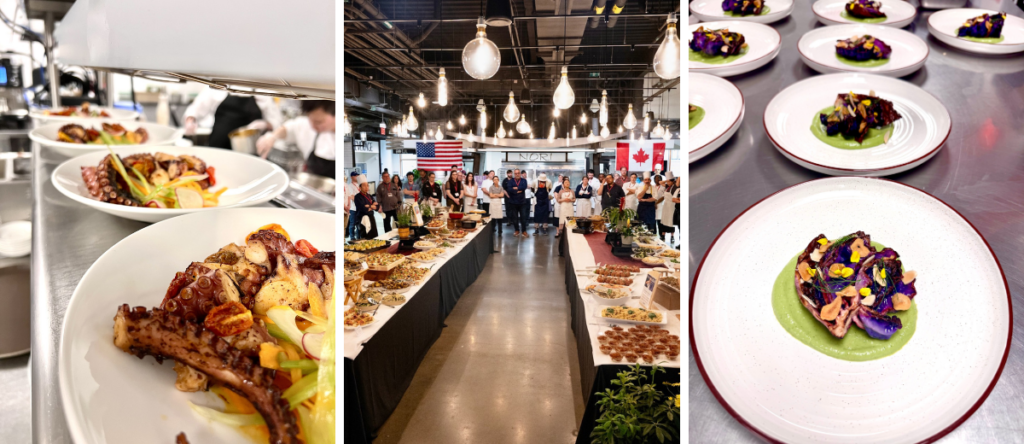
A lot of our inspiration comes from the sixty plus special events we host each year in our dining commons, many of them in partnership with student groups. That collaboration is essential. It keeps us connected to what our students actually want, allows us to celebrate their cultures and cuisines, and brings a level of energy and authenticity that can’t come from the kitchen alone.
It all comes down to staying engaged. By listening to our students and involving them in the process, we build a strong, dynamic food culture that keeps us relevant and evolving.
At UMass Amherst Dining, how do you balance culinary creativity with the operational realities of serving thousands daily?
Balancing creativity at our scale starts with knowing our limits. When you’re serving thousands of people, not every idea translates well, so we focus on what can be executed consistently without compromising quality.
A big part of our approach is inspired by the Mediterranean Diet, which emphasizes high-quality, seasonal ingredients and simple, thoughtful cooking. That philosophy works naturally with the scale we operate at.
When developing menus, we’re constantly refining ideas to make sure they work in our kitchens. Sometimes that means adapting a dish, and other times it means letting it go if it won’t hold up at volume. The standard is simple: if it can scale and still taste great, it earns its place on the menu.
How do student feedback and evolving food trends influence your menu development process?
Student feedback is at the core of how we operate and evolve. We can have all the ideas in the world, but if we’re not listening to the people we serve every day, we’re missing the mark.
We’re fortunate to work with a group of student ambassadors who we meet with monthly, and they play a major role in shaping our program. Beyond those meetings, they act as our eyes and ears on the ground, giving us real-time, honest feedback that allows us to adjust quickly when needed. They also help guide longer-term decisions, from what cuisines they want to see more of to how dining habits are shifting across campus.
That ongoing dialogue creates a true two-way relationship. Students feel heard and involved, and we’re able to build menus that reflect their preferences while staying true to our standards
What systems or structures have been most critical in maintaining excellence across such a large team and operation?
Our focus on local sourcing has built a strong foundation. Consistently working with high-quality ingredients from regional farms and producers elevates everything we do. At the same time, we keep our menus fresh and relevant by consistently developing new ideas, rotating offerings, and giving each dining location its own identity while staying aligned with our overall standards.
We’re also always pushing to improve. With a strong leadership team in place, we’re not just maintaining standards, we’re constantly looking for new ways to enhance the guest experience. That mindset is what allows us to keep evolving and continue delivering at a high level.
For chefs considering a move into institutional dining, what skills or mindset shifts are essential to succeed?
It’s a completely different mindset from working in a restaurant. Even after years of doing this, I still have moments where I step back and think about the fact that we’re producing 50,000 meals a day at the level we do. It’s impressive, and honestly, still a bit surreal. That kind of scale changes how you think about everything.
My advice is to find a program that is truly food-focused. There’s a big difference between operations built around convenience and those built around cooking. When you’re in a place that values ingredients, technique, and flavor, you have the opportunity to do meaningful work and keep pushing the food forward.
I also believe college dining is one of the most impactful spaces in the industry right now. We have a real opportunity to shape how people eat. The way we approach health, sustainability, and global flavors today directly influences what students will expect from restaurants in the future.
If you care about food and want to make an impact at scale, it’s an incredibly powerful place to be.